Some parts of Japanese feel difficult not because they are complex, but because they are too similar.
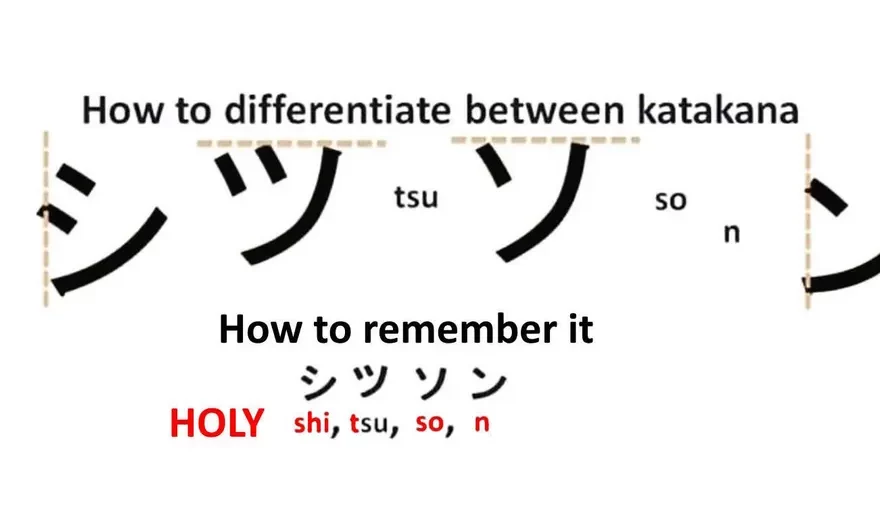
Katakana is a good example. Characters like シ (shi), ツ (tsu), ソ (so), and ン (n) look nearly identical at first glance. Early on, they blur together. Recognition feels unreliable, even when you have seen them many times.
Instead of forcing memorization, I approached them the same way I approach immersion: give the brain something small to hold onto, then let repetition do the rest.
A Simple Pattern Beats Memorization
Rather than treating each character in isolation, I group them and anchor them with a pattern:
シ ツ ソ ン
shi, tsu, so, n
Remembered as:
“HOLY” → shi, tsu, so, n
It is simple, slightly unusual, and just distinct enough to stop everything blending together.
It does not need to be perfect. It just needs to stick.
Why This Works So Well
In Fluent Forever, Gabriel Wyner makes a key point: the brain remembers unusual, vivid, or emotionally charged associations more easily than neutral ones.
That is why slightly strange, exaggerated, or even mildly inappropriate memory hooks tend to work better than clean, logical explanations.
“HOLY” is not a technical explanation. It is not even particularly meaningful. But it stands out. It interrupts the blur of similar shapes and creates a small moment of recognition.
That is enough.
Letting Repetition Reinforce the Pattern
Once the anchor exists, immersion takes over.
Each time these characters appear, whether in reading or vocabulary review, the distinction becomes easier. At first it is conscious. Then it becomes automatic.
You stop thinking about the rule and start recognizing the shape.
This is the same pattern seen in listening immersion:
- initial confusion
- partial recognition
- eventual familiarity
Small Anchors, Long-Term Memory
The goal is not to memorize perfectly on day one. It is to create something memorable enough that repetition can build on it.
A slightly strange, slightly memorable hook is often more effective than a clear explanation.
Over time, the difference between シ, ツ, ソ, and ン stops feeling subtle.
It just feels obvious.