
Quiet Progress Through Repetition
Learning Japanese has a reputation for being overwhelming. New scripts. New grammar. New ways of thinking about sentences that do not map cleanly to English. It is easy to assume that progress only happens when everything is fully understood.
In practice, most progress comes from something quieter: repeated exposure, partial understanding, and the patience to let clarity arrive later.
Reading Without Understanding Everything
One of the most useful shifts in mindset is accepting ambiguity. Early reading often feels unsatisfying because the meaning is incomplete. Words are missing. Grammar feels familiar but not settled.
This is not failure. This is how comprehension forms.
Rereading the same material, even when it feels repetitive, allows patterns to surface. Vocabulary that once required effort starts to register automatically. Grammar points move from conscious decoding to passive recognition.
Understanding grows by layers, not by leaps.
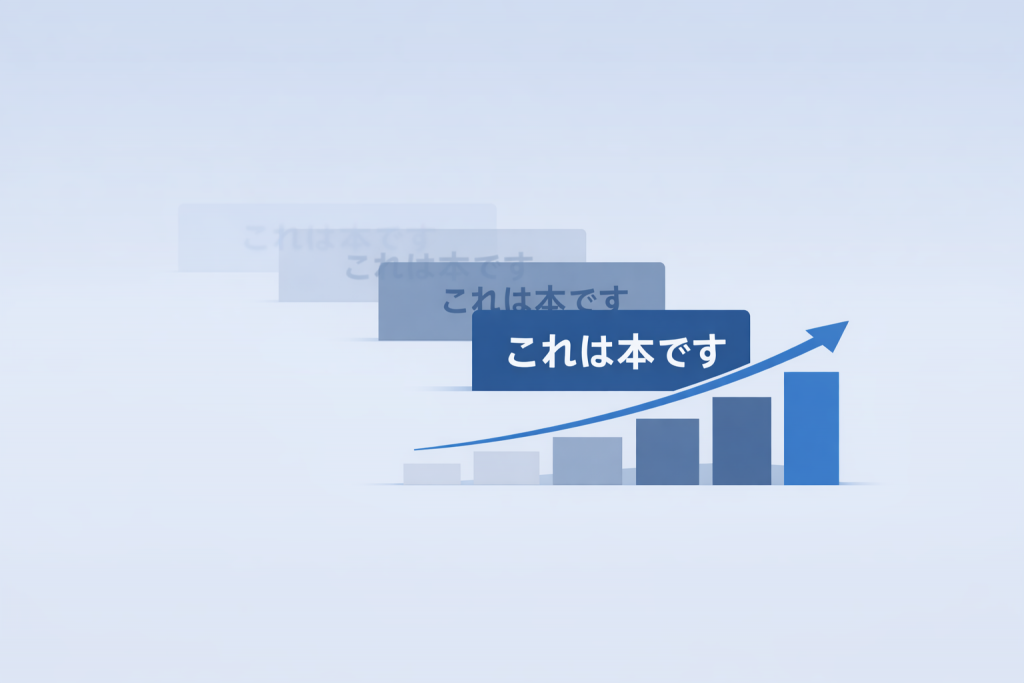
Tolerance of Ambiguity Is a Skill
Many learners get stuck because they wait to feel ready before moving on. They want certainty before exposure.
But fluency does not emerge from certainty. It emerges from repeated contact with material that is only partially understood.
The ability to keep reading, listening, or reviewing while holding uncertainty is a learned skill. Over time, the unknown becomes familiar simply because it keeps appearing.
Repetition turns confusion into context.
Vocabulary as a System, Not a List
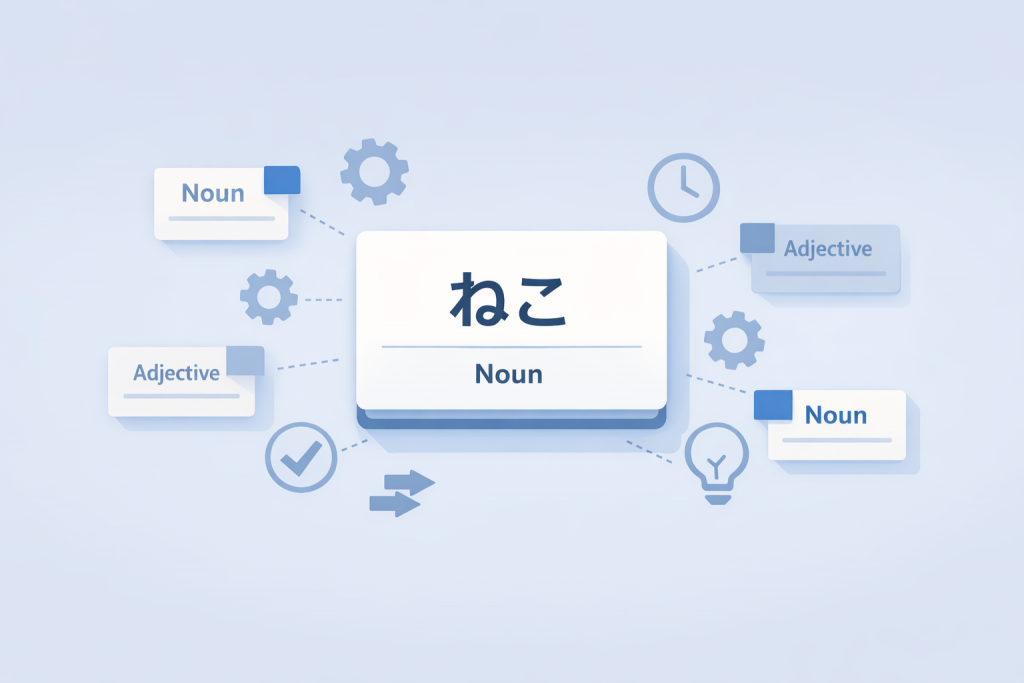
At a certain point, random exposure is no longer enough. Vocabulary needs structure.
Tools like spaced repetition systems are effective not because they are clever, but because they respect how memory works. Words return just as they are about to fade. Context is reinforced before it is lost.
The important part is curation. A smaller deck of words encountered in reading is worth far more than thousands learned in isolation.
Deliberate, Boring, Effective
There is nothing dramatic about this process. Most days feel uneventful.
A few reviews in the morning. A paragraph reread in the evening. The same sentence encountered again, now slightly clearer than before.
This lack of drama is a feature, not a flaw. Progress that compounds rarely announces itself.
Quiet Progress Adds Up
Looked at day by day, improvement is almost invisible. Looked at over months, it is undeniable.
The ability to read longer passages. The moment when a sentence is understood without translating. The realization that ambiguity no longer feels threatening.
None of these arrive all at once.

Learning Japanese does not require intensity or constant novelty. It requires showing up, rereading, and trusting that understanding is forming even when it feels incomplete.
Progress is quiet.
Repetition is enough.