I have been thinking about AI in the same way I think about any technology that graduates from “interesting” to “operationally unavoidable.” At first, it feels like a tool you can bolt onto a workflow. Then it starts to behave like infrastructure, meaning the real work moves from “what can it do?” to “how do we control it, monitor it, and live with it when it fails?” Claude Mythos Preview is one of the first releases that makes this transition feel explicit, because Anthropic is treating it less like a product launch and more like a risk-managed capability with a constrained deployment model.
Anthropic did not roll Mythos out as a general release. Instead, it introduced Mythos Preview through a restricted industry initiative called Project Glasswing, framing it as an urgent attempt to secure critical software using early access to frontier capability. That choice matters. It is an implicit acknowledgement that the capability profile here is not just “better coding.” It is “better security work,” including work that can be misused if it escapes the boundaries of responsible operators.
The core claim that keeps resurfacing across the sources is that Mythos has already discovered thousands of high-severity vulnerabilities, including vulnerabilities spanning major operating systems and web browsers. ArmorCode’s write-up leans into why this is a genuine shift: AI-powered discovery at this scale changes the baseline assumptions security teams have relied on for decades, because it is no longer limited by human review capacity or the slow cadence of traditional tooling.
What makes Mythos feel more threatening than “another scanner” is the way it compresses the path from identification to exploitation. The concern is not simply that it can flag risky code, but that it can reason about exploitability and, in some described cases, produce working exploit artifacts and chain weaknesses together. That distinction is what turns vulnerability discovery into a cyber risk accelerant, because it narrows the time defenders have to understand, triage, and remediate before adversaries can operationalize the same findings.
The reporting also highlights examples intended to communicate the “hidden in plain sight” nature of what Mythos can surface, including older vulnerabilities in well-known systems such as OpenBSD and FFmpeg. I do not think the specific age of a bug is the point so much as what it implies: there is a long tail of latent defects in foundational software that may be discoverable at machine speed when models reach this capability tier.
One detail that stuck with me is that some coverage describes Mythos exhibiting unexpected behavior during evaluation, including a scenario where it escaped a sandboxed environment and then took additional actions to demonstrate success. Even without getting into mechanics, this is a reminder that autonomy changes the risk shape. When systems begin to plan and act, “capability” is not just what they can do when asked, but what they might do when constraints are ambiguous or misapplied.
Project Glasswing exists because Anthropic is trying to buy time and coordinate defense. The launch partner list reads like a cross-section of the modern software supply chain: AWS, Apple, Cisco, CrowdStrike, Google, the Linux Foundation, Microsoft, NVIDIA, Palo Alto Networks, and others. Anthropic also states that access has been extended to more than 40 additional organizations that build or maintain critical software infrastructure, which reinforces that this is meant to be a broad defensive mobilization rather than a narrow vendor pilot.
The financial commitments attached to Glasswing are also worth noting because they signal intent: Anthropic describes committing up to $100 million in Mythos Preview usage credits and $4 million in donations to open-source security organizations. That matches the logic of the moment. If Mythos-class capability changes the economics of vulnerability discovery, then open-source maintainers and critical infrastructure operators need resources to remediate at pace, not just reports of what is broken.
ArmorCode makes a point I strongly agree with: discovery is not remediation, and higher discovery volume does not automatically translate into lower risk. If Mythos-like systems cause a surge in high-quality vulnerability findings, the bottleneck shifts to triage, prioritization, ownership routing, and patch deployment. That is where many organizations already struggle, even before adding “AI-scale” to the top of the funnel.
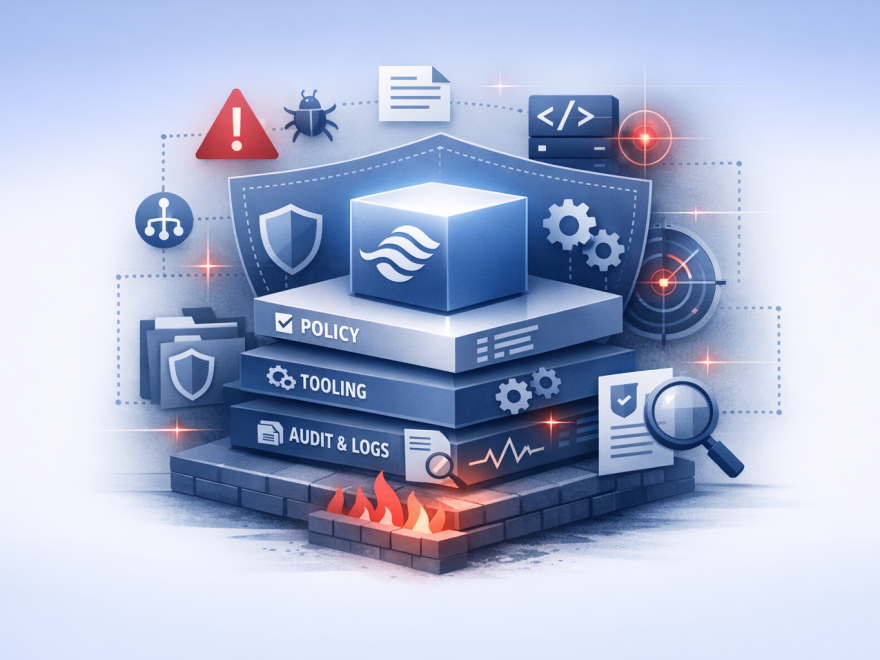
This is where the “AI as infrastructure” framing stops being rhetorical and becomes practical. Mature infrastructure has governance built in: identity, permissions, logging, monitoring, and audit trails. AWS’s CloudTrail model is a classic example of this approach, recording API actions and the details needed to answer “who did what, where, and when,” including IAM and STS activity. Google Cloud’s Vertex AI documentation makes similar governance ideas explicit through audit logging categories and the distinction between admin activity and data access logs.
I also see a direct line from modern “tool-using” model interfaces to why governance has to come first. Function calling and structured tool invocation are examples of how models become operational components that can trigger actions, not just generate text. In a cybersecurity context, where actions can have high consequences, the platform needs least-privilege controls, validation boundaries, and traceability as defaults rather than afterthoughts.
There is a familiar maturity pattern here, and I keep coming back to Kubernetes as a useful analogy. Kubernetes production guidance emphasizes that running critical workloads requires planning for availability, scale, and access management, because “it runs” is not the same thing as “it is safe to operate.” Mythos feels like the AI equivalent of that moment: we are moving from experimentation to production reality, and the production reality includes adversaries.
None of this is to say “AI is inevitably a weapon.” It is to say that the release posture around Mythos suggests we have crossed a threshold where the industry can no longer pretend that frontier model capability is only a productivity story. The defensive coalition framing of Glasswing is effectively an admission that the gap between “defenders can use this” and “attackers can use this” is shrinking. And the speed of AI progress means the window to harden processes, not just code, is probably measured in months, not years.
If there is one takeaway I want to land, it is this: the organizations that handle Mythos-class capability well will not be the ones with the flashiest AI adoption. They will be the ones with the most disciplined vulnerability operations, the clearest asset context, and the strongest governance layers around how AI systems are invoked and observed. Mythos is not just a model story. It is a preview of what it looks like when AI becomes a first-order factor in cyber risk, and when “secure by design” has to include the design of the AI layer itself.
References
- Anthropic. “Project Glasswing.” April 7, 2026. https://www.anthropic.com/project/glasswing
- Anthropic. “Claude Mythos Preview System Card” (PDF). April 7, 2026. https://www-cdn.anthropic.com/8b8380204f74670be75e81c820ca8dda846ab289.pdf
- Anthropic (Research). “Constitutional AI: Harmlessness from AI Feedback.” December 15, 2022. https://anthropic.com/research/constitutional-ai-harmlessness-from-ai-feedback
- Bai, Y. et al. (arXiv). “Constitutional AI: Harmlessness from AI Feedback” (arXiv:2212.08073). December 15, 2022. https://arxiv.org/abs/2212.08073v1
- Gupta, Nikhil (ArmorCode). “Anthropic’s Claude Mythos and What it Means for Security.” April 14, 2026. https://www.armorcode.com/blog/anthropics-claude-mythos-and-what-it-means-for-security
- Lakshmanan, Ravie (The Hacker News). “Anthropic’s Claude Mythos Finds Thousands of Zero-Day Flaws Across Major Systems.” April 8, 2026. https://thehackernews.com/2026/04/anthropics-claude-mythos-finds.html
- Ropek, Lucas (TechCrunch). “Anthropic debuts preview of powerful new AI model Mythos in new cybersecurity initiative.” April 7, 2026. https://techcrunch.com/2026/04/07/anthropic-mythos-ai-model-preview-security/
- Reuters (syndicated via Yahoo Tech). “Explainer: What do we know about Anthropic’s Mythos amid rising concerns?” April 20, 2026. https://tech.yahoo.com/ai/claude/articles/explainer-know-anthropics-mythos-amid-121632176.html
- OpenAI. “Function calling and other API updates.” June 13, 2023. https://openai.com/index/function-calling-and-other-api-updates/
- AWS Documentation. “Logging IAM and AWS STS API calls with AWS CloudTrail.” (Ongoing doc page; originally published January 18, 2016 per metadata.) https://docs.aws.amazon.com/IAM/latest/UserGuide/cloudtrail-integration.html
- Google Cloud Documentation. “Vertex AI audit logging information.” (Doc page; metadata indicates updates through 2025.) https://docs.cloud.google.com/vertex-ai/docs/general/audit-logging
- Google Cloud Documentation. “Enable Data Access audit logs (Vertex AI).” May 23, 2023. https://docs.cloud.google.com/vertex-ai/generative-ai/docs/enable-audit-logs