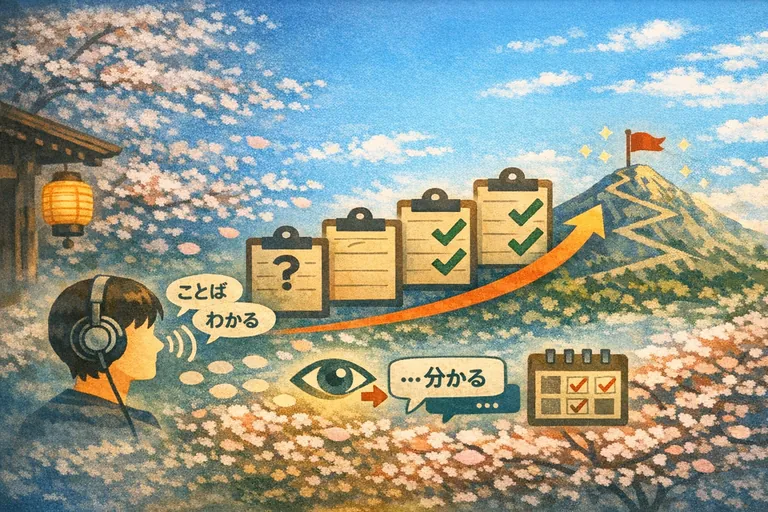
Quiet Exposure and How to Notice Progress
After spending time with more structured study, I started experimenting with something simpler: letting Japanese play around me through YouTube while I went about my day. No transcripts. No pausing. No pressure to understand everything.
What surprised me most was how effective this turned out to be.
Even when the content played in the background, with only partial attention, I began picking up more words and phrases than I expected. Not all at once. Not cleanly. But consistently.
This kind of immersion works precisely because it removes the need to perform.
Why YouTube Works Well for Immersion
YouTube is an unusually good immersion tool because it offers long-form, natural speech with consistent voices and pacing. When the same speaker appears repeatedly, their patterns settle in quickly. Sentence endings feel familiar. Common phrases start to stand out. The rhythm of the language becomes predictable before it becomes understandable.
Another advantage is tone. Calm, conversational channels are easier to absorb than fast-paced or exaggerated content. When the speech is measured, the brain has space to separate sounds without trying to solve them.
Understanding is not the entry requirement. Exposure is.
Background Listening Is Still Learning
It is easy to think that background listening is passive. It is not.
Even without focused attention, the brain is:
- Learning word boundaries
- Internalizing sentence structure
- Absorbing intonation and pacing
I often do not grasp full sentences, but individual words register more often than they used to. Sometimes a phrase jumps out because I saw it while reading. Sometimes I recognize the shape of a sentence without knowing the details.
That is immersion doing its work quietly.
How to Track Progress Without Turning It Into a Test
The hardest part of immersion is that progress does not announce itself. There are no obvious milestones. That does not mean nothing is changing.
The most reliable signals are subtle:
- Japanese starts to sound familiar rather than noisy
- Certain words are recognized instantly, without translation
- It becomes easier to tell when a sentence is ending or softening
- Listening feels less tiring than it once did
A useful reflection is simply: Does this feel easier than it did a month ago?
If the answer is yes, immersion is working.
Revisiting older videos or familiar speakers often makes this especially clear. The content is the same, but your relationship to it has shifted.
Suggested YouTube Channels for Immersion
For background-friendly immersion, channels with calm pacing and natural speech work best. A few good categories to explore:
- Japanese podcast-style channels aimed at learners, spoken entirely in Japanese
- Vlogging channels with everyday topics and relaxed delivery
- Slice-of-life commentary with minimal editing and consistent speakers
Examples many learners find useful include:
The specific channel matters less than consistency. Hearing the same voices regularly lowers cognitive load and improves recognition.
Playing YouTube in the Background Without Ads
One practical friction point with YouTube immersion is ads, especially when listening for long stretches. To reduce interruptions and allow background playback, I have been using skipcut to run playlists continuously:
https://skipcut.com/?list=PLFGs3d9SobfjFHWguksKU91CC5cyEFeWi
This makes it easier to press play once and let immersion happen without constant interaction. That ease is important. If immersion requires effort to maintain, it does not last.
Quiet Progress Still Counts
This method feels uneventful day to day. Nothing dramatic happens. Then, slowly, meaning starts to arrive unannounced. Words connect. Sentences feel less opaque. Ambiguity becomes tolerable rather than frustrating.
You do not need to understand everything. You do not need to track every improvement.
You need continuity.